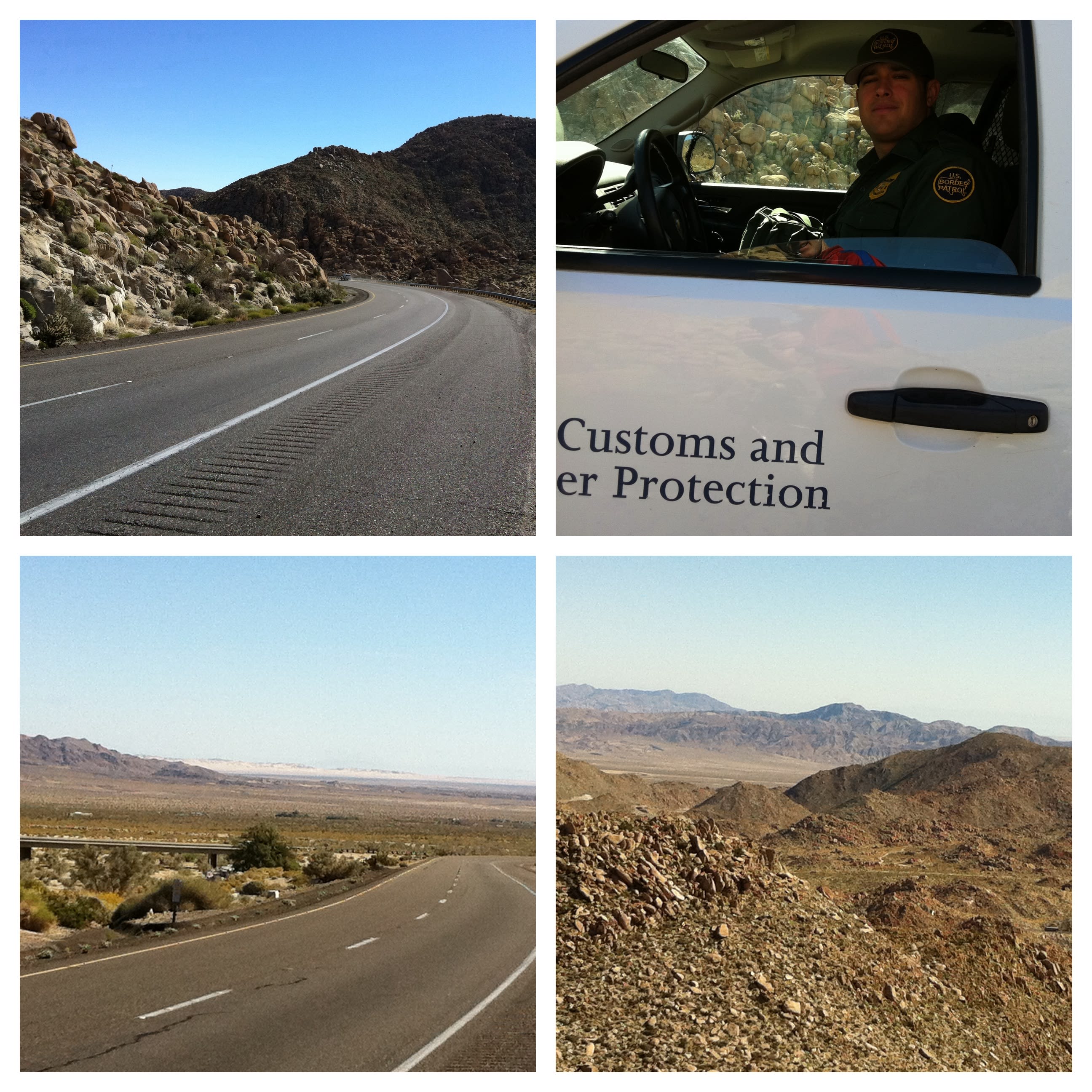
“Stopping by Woods on a Snowy Evening” by Robert Frost is a favorite poem for many, including me. While the words: “But I have promises to keep, And miles to go before I sleep” are not referring to a journey like mine, they still came to me regularly along the way. I did once come to a complete stop as I saw the road ahead dividing. My map had me taking the route to the right, but I sat there for several minutes as I thought of another Frost poem and these words:
Frost’s roads may have diverged in a quiet wood, but mine were to be in less poetic places — including army offices, where the chain of command mattered more than compass direction. Still, the choice was the same: standstill or step forward.
I had been in Knoxville for a few months when we found out our Sargent was being transferred to Vietnam. It seemed like once he got that news he disappeared. He would spend pretty much all day in the Lieutenant’s office. This caused some issues as there was nobody there to tell the soldiers who gave the 6AM test they could leave early, or that a group set to leave at 4PM could go. So, everyone was staying until 5PM. This was particularly a problem for those of us with second jobs. We were all complaining, but no one was doing anything. After about a week, one afternoon around 2PM I knocked on the Lieutenant’s door. I was admitted and said: “We’re caught up on the morning’s scoring; do you think the early guys could leave?” They both stared at me for the longest time before the lieutenant answered: “Sure, tell them they can go.”
The next day I was called into his office and sat before the two of them. I was reminded that the Sargent shipped out for Vietnam in a few weeks. Then it happened. “Specialist Evans, would you like to be in charge of Mental Testing?” The words from the Lieutenant took me by complete surprise and my response was stunned silence. After a moment he went on: “Do you think you could handle it?” I said that I could, but there were a couple of problems. I was the youngest soldier in the office, and more importantly, most of the other guys outranked me. They both burst out laughing and explained that was not a problem. I was promoted to Sp5, the equivalent of a sergeant — accompanied by a nice jump in salary. I should mention I was the only one in the office who had not graduated from college.
The Army had thrown me into another situation which finely tuned any leadership skills I had. Starting with Platoon Guide in basic training, then Chief Orders Clerk in Korea, I was now the head of Mental Testing. I knew people need to feel they are working with you, not just for you. I realized a good leader didn’t just tell people what to do but led by example. Respect had to be earned, as it does not come with a position. I learned you can’t treat everyone the same, even though that seems the logical thing to do. Getting the most out of the people working with you requires understanding some people need a pat on the back, while others need a kick in the rear, still others work best when left alone. Years down the road I would be a better Department Chair and Principal because of my Army days.
As I mentioned, it was imperative the first test start on time to ensure the rest of the day moved smoothly. Jeff just didn’t seem to get this. On a fairly regular basis his partner that day would just be babysitting the recruits until he showed up. I talked to him about this several times, but the behavior continued. Finally, I had just had enough. I took him aside after another late start and began quietly enough but eventually had him up against a wall with my nose inches from his. I was yelling at a volume no one in the office had ever heard. Finally, I shouted: “Just tell me you won’t do it again!” We looked at each other in the silence, and he finally stammered: “I can’t.” We continued to stare at each other, and I think I was the one who laughed first. We both knew he could not promise that it would never, ever, happen again. But he really tried after that, and with great success.
I could make this book just about my experiences interviewing those Category V failures with ten or more years of education. For those failing on purpose, it was pretty easy to prove they were actually able to read. I had a thick stack of cards with pictures on them. I would simply show the recruit picture after picture in quick succession asking him to identify what he was seeing: “Car”, “Dog”, “Flower”, “Boat”, “Shovel”, “Chicken.” After twenty or thirty pictures some of them would be repeated, but with a slight variation — “Spade” instead of “Shovel,” “Puppy” instead of “Dog.” What the recruit who really could read didn’t realize was that by moving in quick succession he would begin to read the words — and inevitably state the less common variations. At this point I would put the cards down and tell the recruit I know he actually can read. They pretty much always asked to take the test again.
One of the most amazing interviews I had was with a young man that got all of the fifty picture questions right, and hardly any of the written ones. He was a coal miner from Harlan County, Kentucky. There was something about his eyes that exuded intelligence. He had legitimately gotten all those picture questions correct — and had also legitimately badly failed the written portion as he simply could not read. He was completely uneducated, something hard to imagine in our modern world. Of the two of us, the man across from me was the far more intelligent. He would not see Vietnam but would be returning to the coal mine.
I wondered how the young Black man I was about to interview had failed the test as he had completed thirteen years of education. It turned out he was the first in his family to graduate from high school and was starting his second year at Tennessee A & I, now called Tennessee State University — the only state-funded historically Black university in Tennessee. He was proud of what he had accomplished so far. Sadly, the segregated schools he had attended were of such poor quality that while he earned a high school diploma, he could not pass the Army’s Entrance Exam. He had been “socially” passed along from grade to grade. I couldn’t know what the future held for him, but as one of the nicest young men I ever met, I certainly wished the best for him.
The young man sitting across from me seemed excited to be there. I told him I wanted to ask him a question, and he should think very carefully before answering. “Did you fail the test on purpose?” His expression immediately changed from excitement to deep dread. “No, of course not,” he replied, and tears began welling up in his eyes. He had been in trouble much of his life. A judge — a former military man — saw something in him and said that if he joined the Army, he would suspend his sentence. “You have to let me in! This is my last chance.” He had failed by one point. When I finished checking his answer sheet, it became one point higher.
What I did was not just wrong, but illegal. To this day I wonder how life unfolded for him. Did he even survive Vietnam? Did he come home with PTSD? Did he become the different person he and the judge thought he could be? I’ll never know, but I sure hope so.